
Studio Letter: June 2025
Florida shadows, the chiasm, weather vanes, and the betrayal of Saint Peter

I was back in Florida for less than a week in late May for the 73rd annual Florida Folk Festival, which I’ve been going to on and off with my high school friends and their families since 2016. I visit Florida rarely now. Each time I am struck by the quality of the light, but more so by the quality of the shadows.
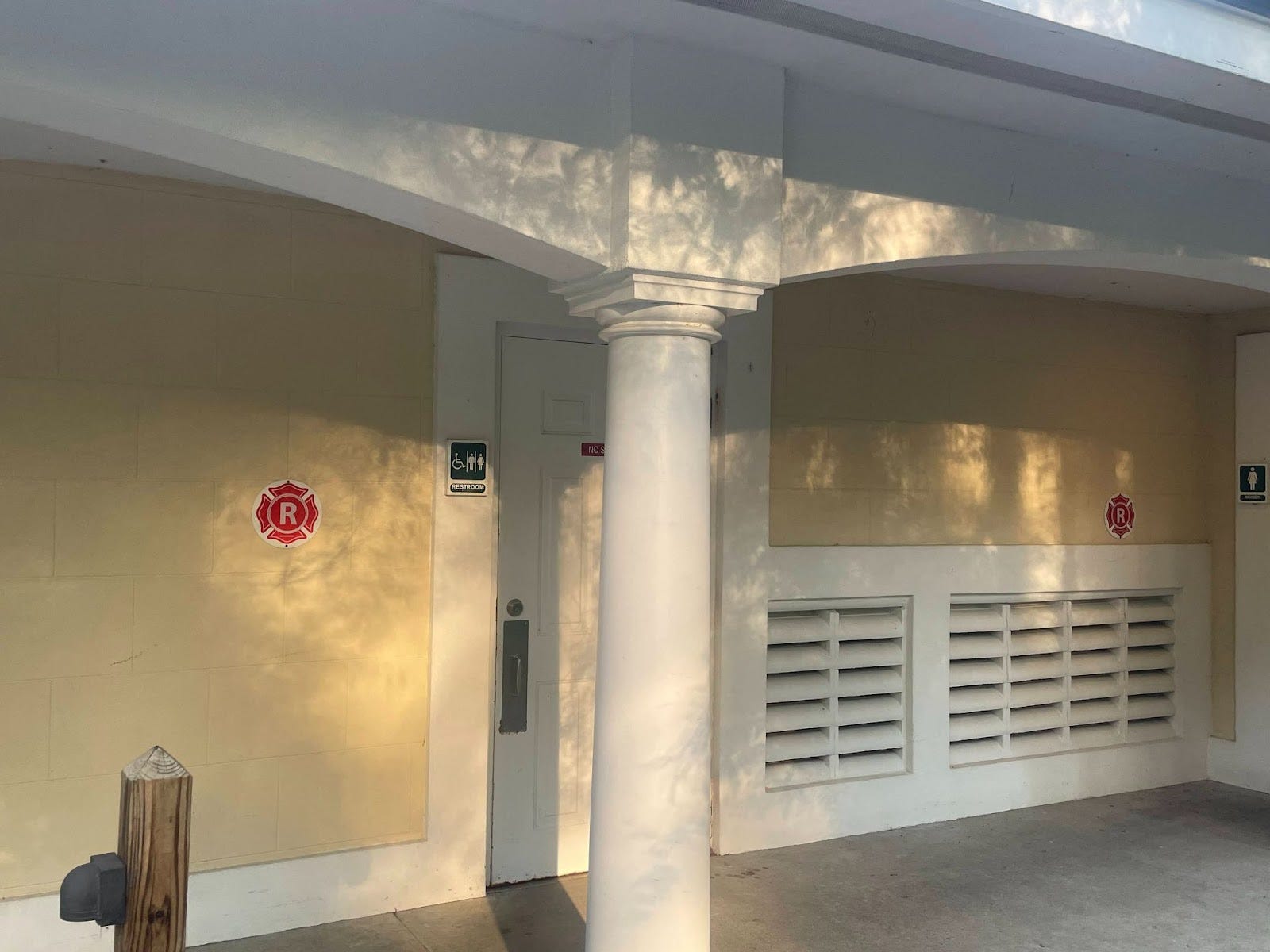
I had my film camera and my first roll of slide film with me. I took some photos of things that I kept coming back to throughout the weekend: the Suwannee River, one particularly beautiful yellow lamp light, shadows (of course), a copse of tall scraggly Florida pines. Maybe I will learn something new about horizons when I get them developed.
I kept saying to people that the shadows were different because of the humidity. I just looked this up, because I had no idea if it was true—but I have been assured by several websites that humidity does indeed affect the way light works. Makes sense, when you think about fog and clouds. Humidity, I remember now, is part of what causes green flashes at sunset.
This makes me think I could build a humidity chamber that allows me to mimic the shadows in different places, perhaps in real time. Such an idea makes me think of one of my favorite Janet Cardiff and George Bures Miller pieces, Storm Room. I have never seen the piece in person, but I think about it when I miss Florida thunderstorms.
I have been working my way though a short Maurice Merleau-Ponty essay: The Intertwining—The Chiasm. I love reading Merleau-Ponty, but it doesn’t always sink in right away, so I’ve had to go through it several times now. The chiasm is like the moment where your left hand is touching your right hand, but as soon as you think about it, suddenly your right hand is touching your left hand. Subject and object, shifting back and forth. The perceiver and the perceived. Merleau-Ponty is best read in full, because his writing builds upon itself really beautifully, but here is a (mostly) digestible excerpt:
“We understand then why we see the things themselves, in their places, where they are, according to their being which is indeed more than their being-perceived and why at the same time we are separated from them by all the thickness of the look and of the body; it is that this distance is not the contrary of this proximity, it is deeply consonant with it, it is synonymous with it. It is that the thickness of flesh between the seer and the thing is constitutive for the thing of its visibility as for the seer of his corporeity; it is not an obstacle between them, it is their means of communication. It is for the same reason that I am at the heart of the visible and that I am far from it: because it has thickness and is thereby naturally destined to be seen by a body. What is indefinable in the quale, in the color, is nothing else than a brief, peremptory manner of giving in one sole something, in one sole tone of being, visions past, visions to come, by whole clusters. I who see have my own depth also, being backed up by this same visible which I see and which, I know very well, closes in behind me. The thickness of the body, far from rivaling that of the world, is on the contrary the sole means I have to go until the heart of the things, by making myself a world and by making them flesh.”
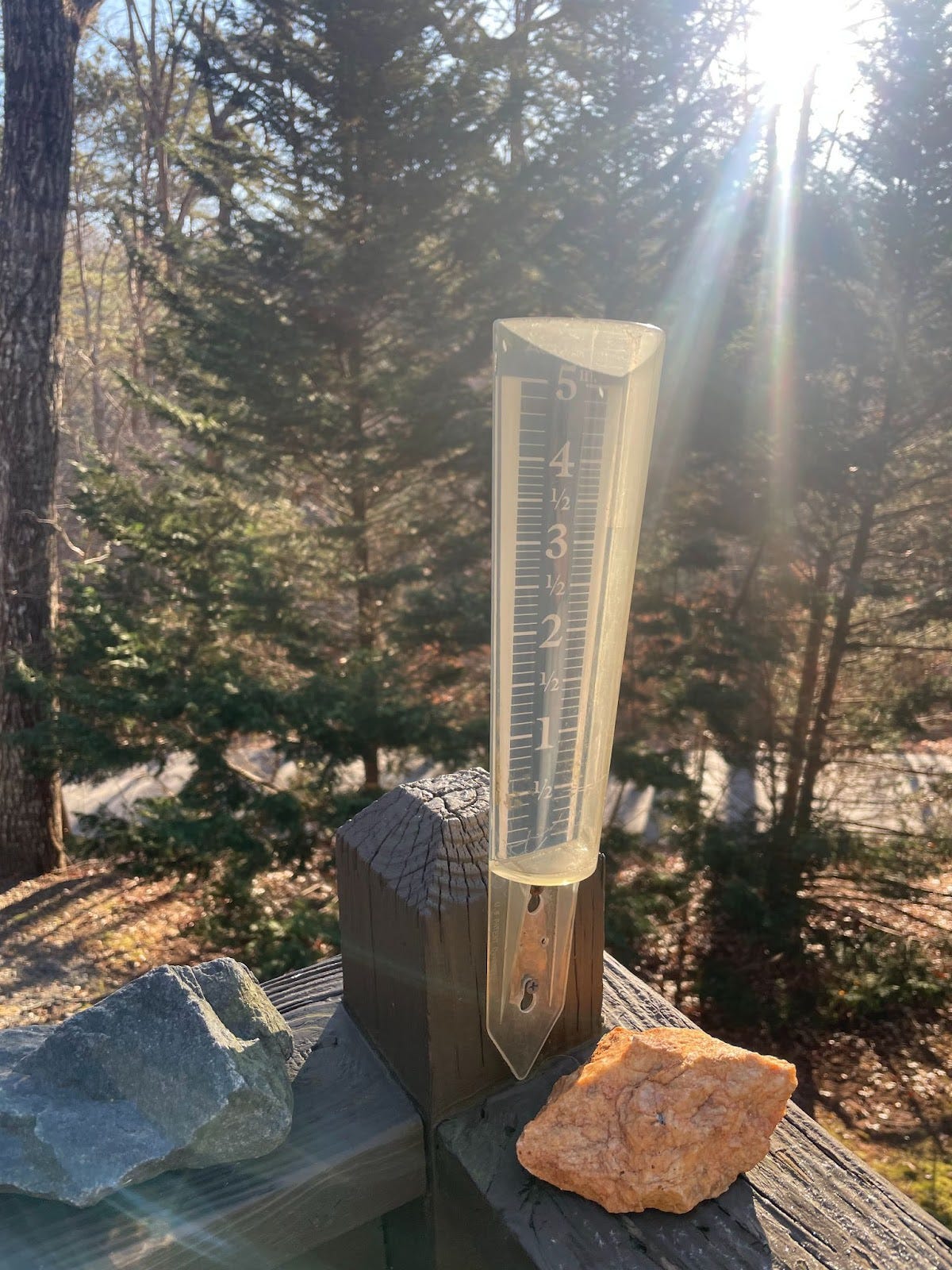
This is how I think about art-making; how I think about our relationships with each other and with objects. It is a hard thing to focus on, but I find something new each time. One object I have been thinking about for the past year is the weather vane. I was thinking about all weather instruments for a bit, like this rain meter on my grandmother’s porch.
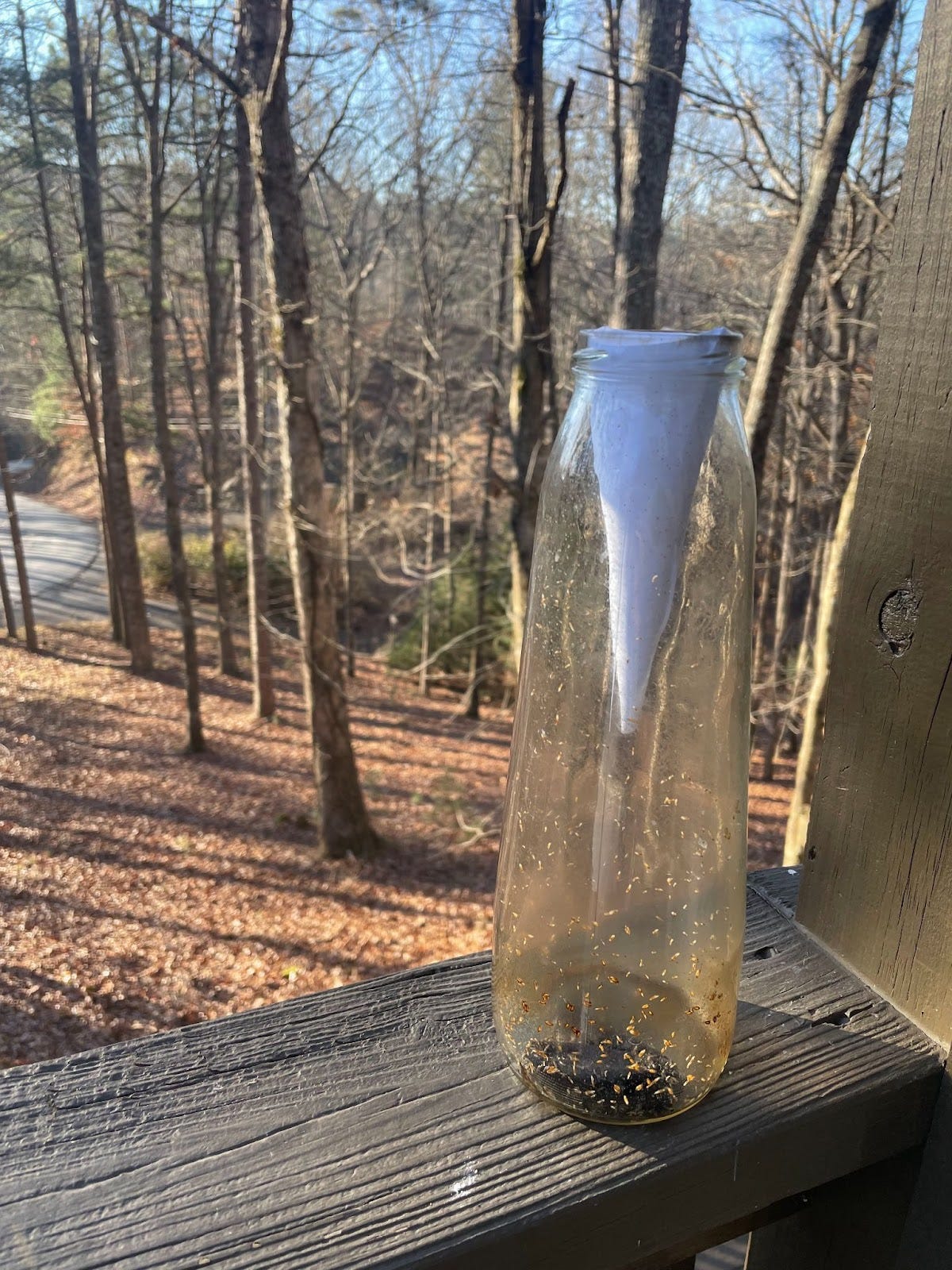
Opposite the rain meter on the porch railing is this homemade fly trap—a different sort of weather measurement, I realize now.
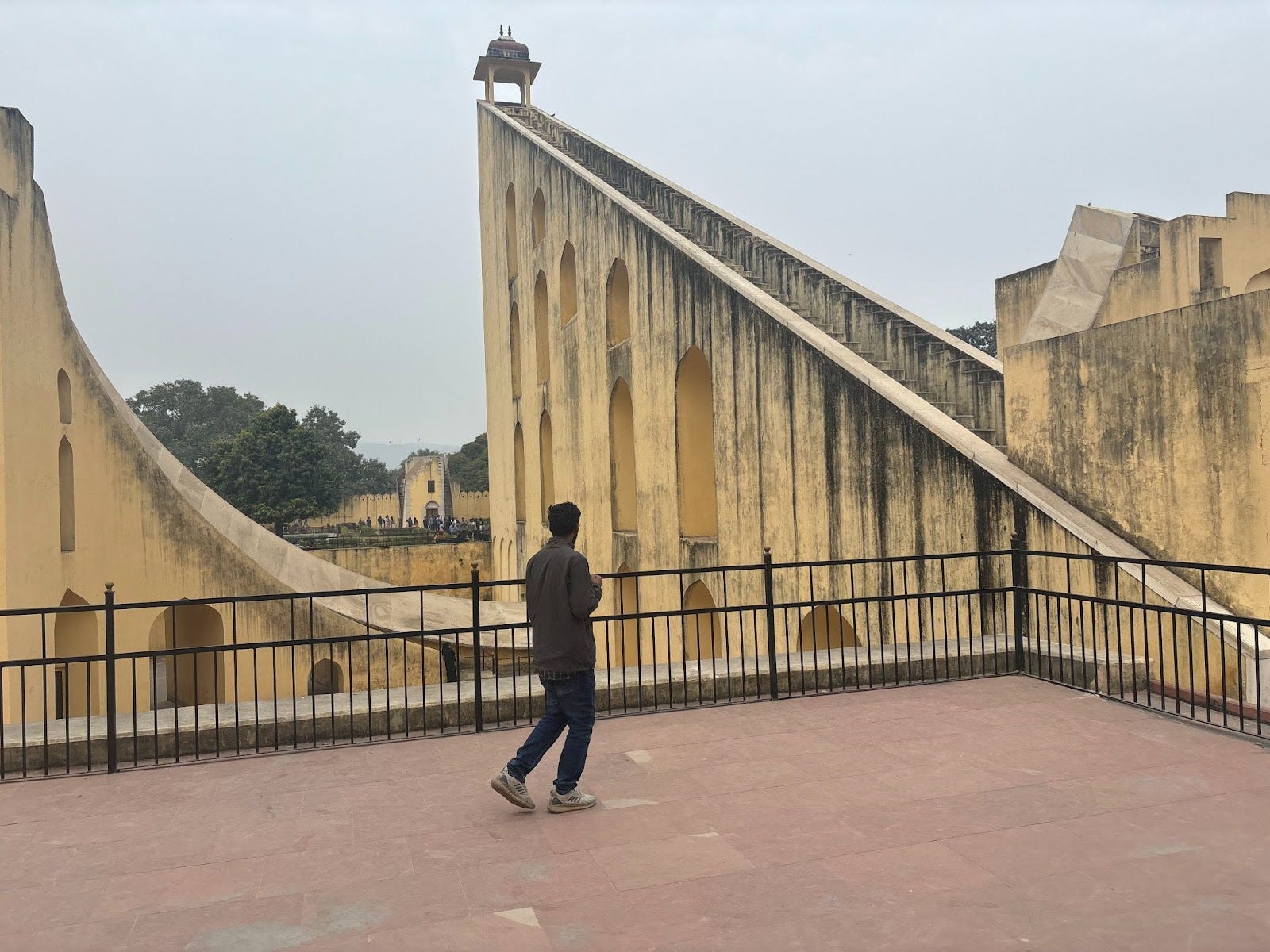
Around the same time I took these photos, Sidd was texting me photos of the astronomical instruments in Jantar Mantar, Jaipur, including this: the world’s largest stone sundial (which, if you’ve seen the 2006 film, The Fall, will be familiar).
I kept coming back to weather vanes. Last year I began listening to my great uncle’s interviews with the Shoah Foundation, which my cousin emailed to me after my great uncle passed last February. I’m revisiting them now, as they’re quite long and the stories haven’t all sunk in yet. The first air raid in Salonica (now Thessaloniki) happened on his 13th birthday, October 15th, 1940, as the family was dressed up and headed to his bar mitzvah. He had been dreading the occasion, and briefly he convinced himself that he had somehow caused a world war all to avoid having to stand up and read in front of a crowd.
It is his description of the train ride to Bergen-Belsen that hangs over me the most—having this sense of moving without knowing the direction. I can only imagine that the modern equivalent is to be held in detention and then packed into a plane or a bus. To not know where you are going but to know that you may never go home or see your family again. It is a hard thing to think about. When my great uncle did eventually return to his childhood home many years later, he told my grandfather not to bother—that absolutely nothing was the same.
The weather vanes I have been thinking about making have no compass—they tell you the direction of the wind but they don’t tell you where north is. This conjures up the image of a tall stick with an arrow that spins according to the breeze—too simple, not enough surface area, not enough interest. Most weather vanes have a decorative element at their top. Often a rooster—but why?
farmersalmanac.com answers:
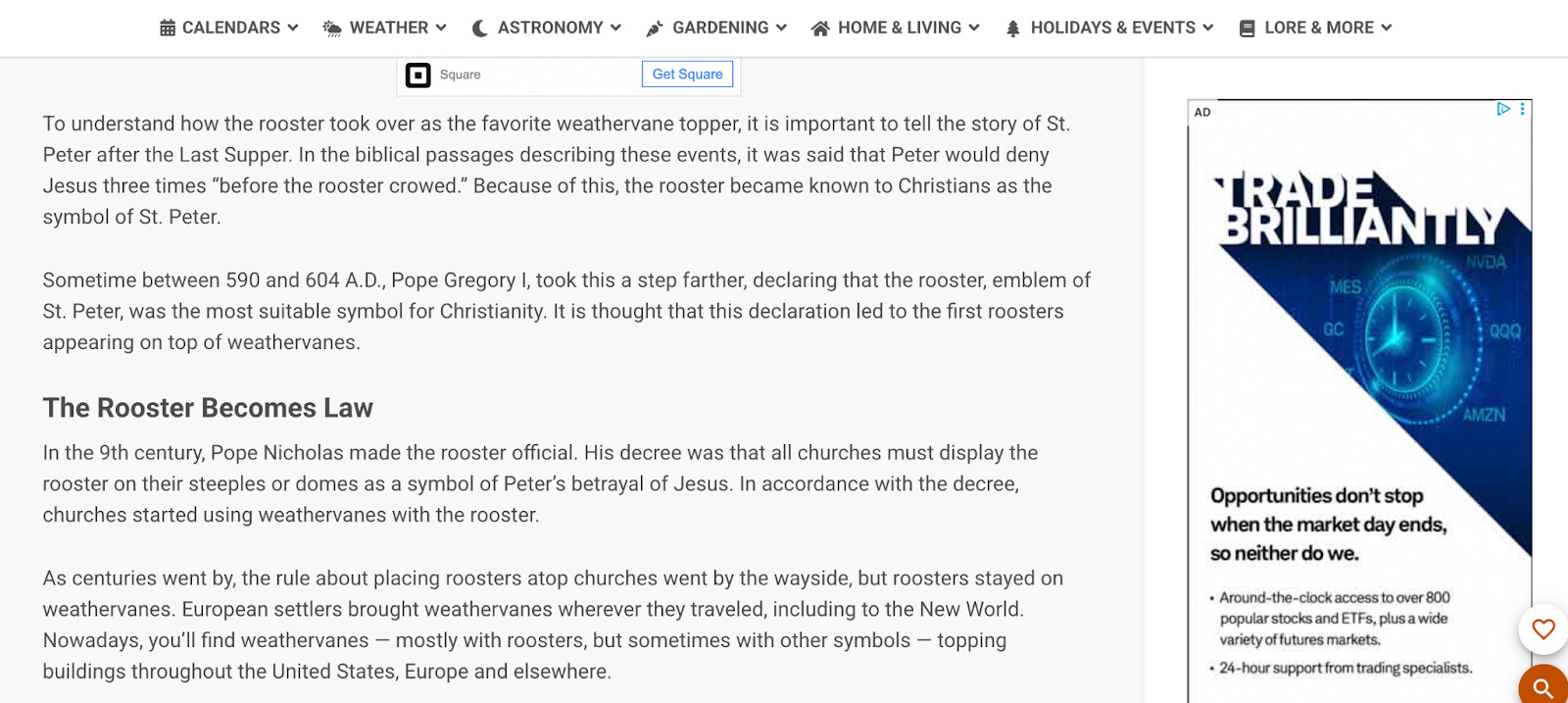
I have relatively little personal connection to the betrayal of St. Peter, beyond finding my origins in St. Petersburg, Florida. I do feel that there must be some object on top of the weather vane—if only because you need something to catch the wind. Maybe there will need to be many weather vanes. Maybe their objects are all different. Maybe they are on a hill.
With love,
Indigo R. Conat-Naar
P.S: Upcoming Exhibitions
GOING NOWHERE IN EITHER DIRECTION
June 20th—June 29th, 2025
Ezri Horne and Indigo Conat-Naar
Reception: 6-8pm, June 20th
knockin’ on your screen door
July 6th—August 10th, 2025
Ezri Horne and Indigo Conat-Naar
Reception: 2-4pm, July 13th
Artist Talk: 3-4pm, July 27th
P.S.S: Studio Song of the Moment (Always by The Mountain Goats)
I’ve been listening to Transcendental Youth (2012) a lot this month, but none of the songs clicked for the purposes of this letter, though Counterfeit Florida Plates came close. Instead, I offer Tidal Wave, off of Getting Into Knives (2020).
It's not the barnacles that do all the damage
Figure this out too late
It's not the destination that makes the difference
It's the freight
Everything becomes a blur from six feet away
Get used to this
Every card ever turned over remains in play
Get used to this
Not every wave is a tidal wave
Not every wave is a tidal wave
It's not the mutiny that gets written down in the diary
It's the manifest
Forgotten cargo in obsolete measurements
Anybody's guess
Even the proud, even the very proud
Probably die on their knees
Twin masts out on the open seas
Mistaken for trees
Not every wave is a tidal wave
Not every wave is a tidal wave