
Studio Letter: September 2025
Lake Monona, a cat named Whisky, Saturn, slide film, and more horizons

After months of slowly packing and wrapping up my life in Boston, I’ve made it to Madison, Wisconsin, where I am living alone for the first time in my life. I am surrounded by water here in a way that I haven’t been since I was in high school. It is a reassuring, familiar presence, even if it isn’t the ocean. It is particularly helpful for thinking about horizons.
All of the projects I’ve been working on over the last several years are finally complete, including the You Draw My House, I’ll Draw Yours book that Ezri Horne and I made together (you can find the order form at the end of this letter). It has been a long time since I’ve had a clean slate in my studio. To force myself into action, I finished a version of the idea that I detailed in the first Studio Letter.
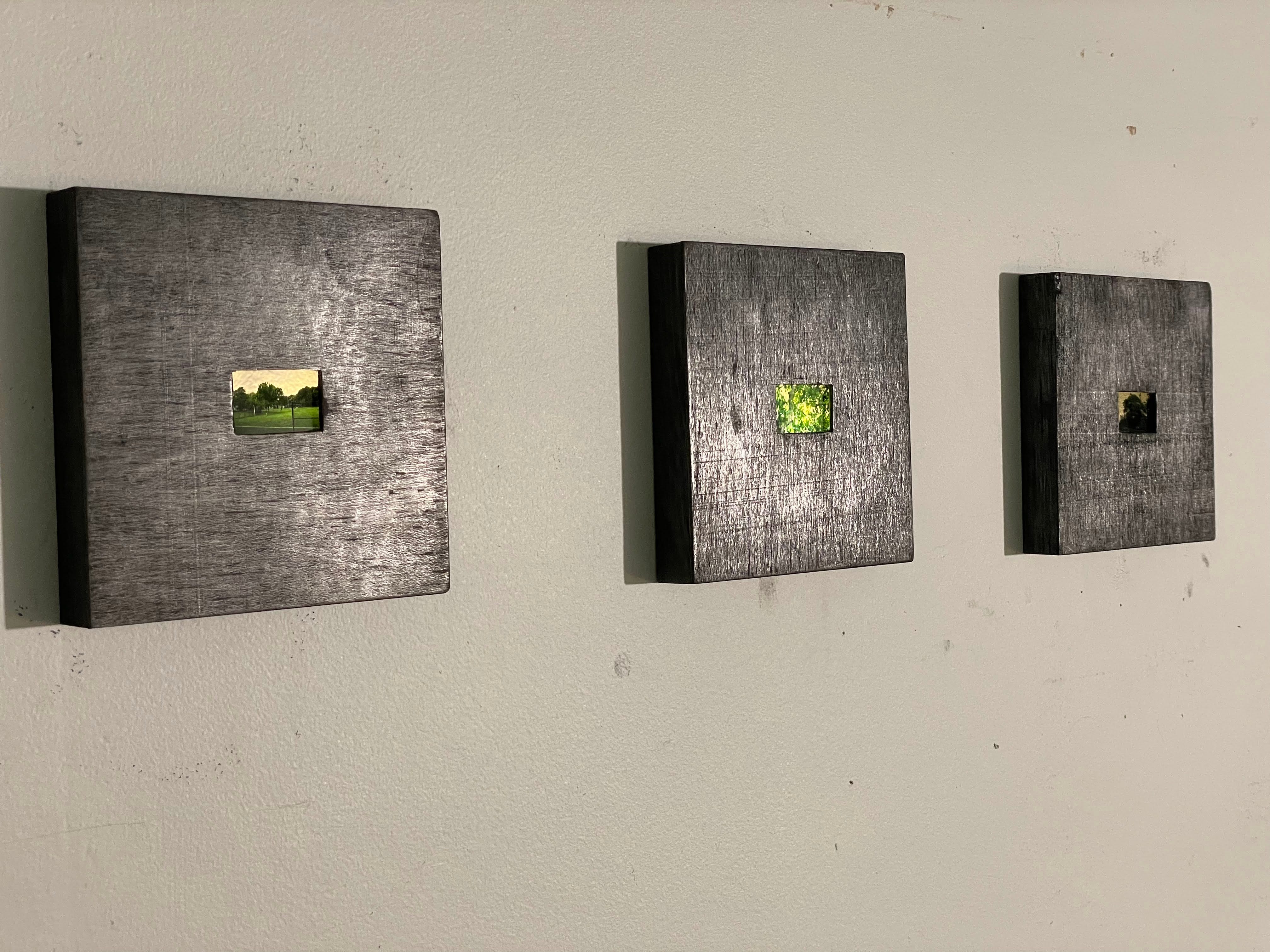
Each of these little wood panels hides a small LED which lights up the wall behind the slide film. Each window is hand cut, and therefore a little wonky. The panels are covered with graphite, because I still love smearing graphite onto objects, and because the wood was cheap and a little ugly—I’ve slowly learned to avoid using nicer materials until I know exactly what I want to make. The slide on the left is a view from the sycamore tree in Donnelly Field in Cambridge that looks in the direction of my mother’s apartment. The view in the middle is an out-of-focus view of the tree canopy above. The last is a slide of my mother taken a few weeks later, standing under the same sycamore tree. Over a hill and back again; a small chiasm.
One of the commandments I’ve given myself for graduate school is to make more small objects; to explore the first wobbly ideas for a piece. So far that effort is paying off, if only because as I walk home from the studio after looking at those film-box-objects, I see Lake Monona at night, and the lights on the edge are sort of like a film strip, and the sky and the water is sort of like graphite, and that alone is enough to get me to the next step, I think.
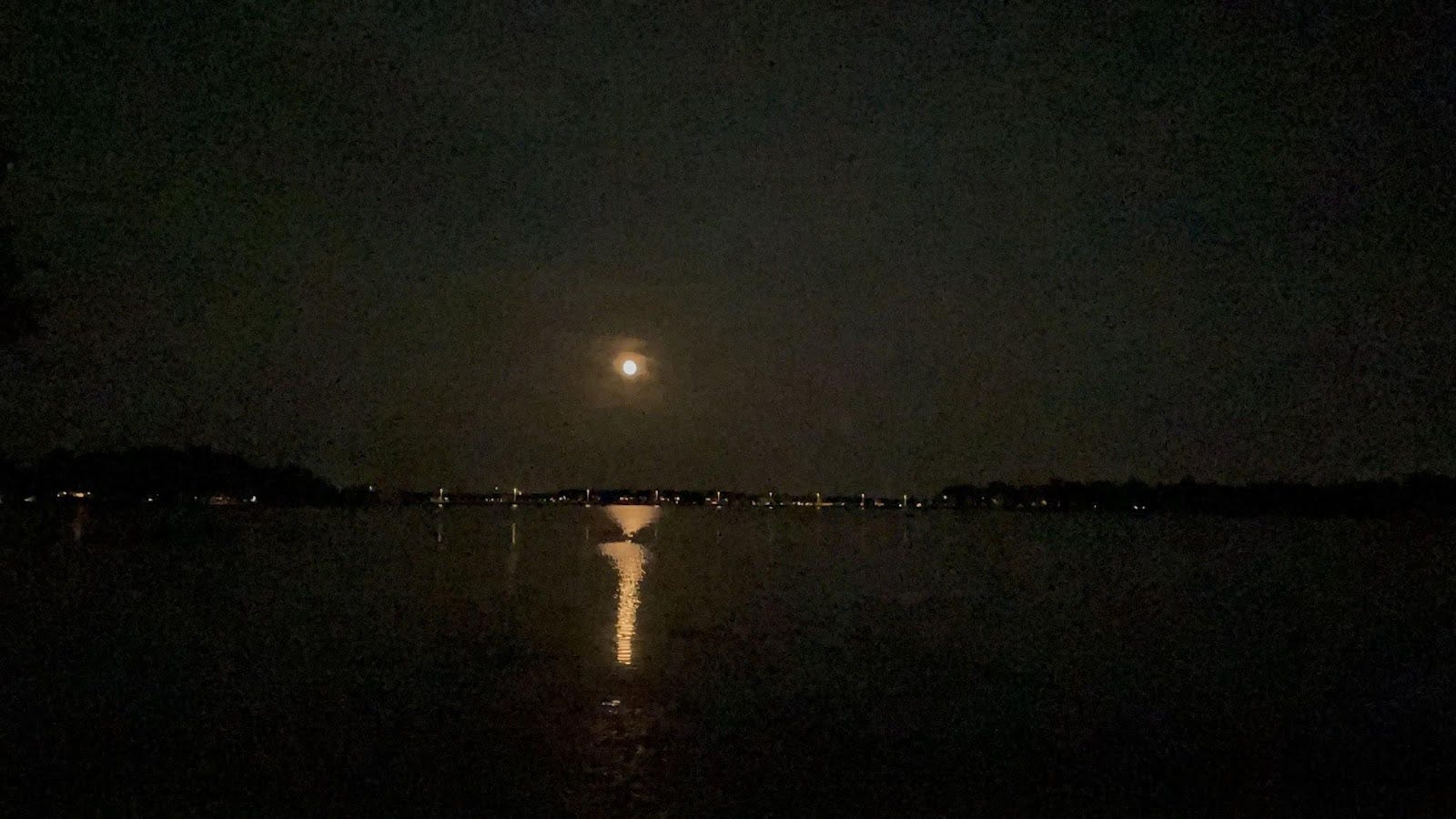
In reviewing the first Studio Letter, I came across this line that I wrote:
“I have started to love this notion of the horizon as the only true thing, embracing this absurdist idea that everything else is simply placed in front of it to cover it up—an obstruction, a hill.”
I am not sure I still feel the same way. Or, at least, I am thinking about it differently. A horizon is a hill itself, after all. Rather, I am interested in this edge between perception and reality. It is not so much that something else is in the way, it is that nothing at all is in the way except our own edges. These edges still take up space; you have to travel to the halfway point forever before you can reach your destination.
Last week, I went to the Washburn Observatory with a friend from my grad program. We waited in a line to look at Saturn, and, this being our first time at an observatory, we wondered aloud about what Saturn might actually look like through the massive telescope at the center of the room. Would it be like a NASA photograph? Would it be a dot? Maybe a bigger-than-usual dot? We learned that it looks like Saturn. A bright sphere, with a thin line running around it—the rings.
It takes light from Saturn about 80 minutes to reach Earth. The light waves that make up the image of Saturn that I saw at 9:30pm CT reflected off Saturn a little after 8pm (as if 8pm could exist on Saturn). At that time, my friend and I were walking through a parking lot, just after dinner. In the very basic science class that I took in undergrad, I learned how the universe is expanding faster than the speed of light, and the further away galaxies are from each other, the faster they grow apart. Right now, there is light traveling towards us from billions and billions of years ago that, because of the expansion of the universe, will never reach us.
A couple of weeks ago, I was enormously lucky at a local bookstore (thank you, A Room of One’s Own) and happened across a new publication of Chris Marker’s early writings, Eternal current events. He writes, in perfect summary:
“Time is only wounded. It does not stop.”
Last fall, I had a similarly lucky find: A first-ever English translation of Marker’s 1982 photo essay, Le Dépays, which my partner purchased for me (thank you, Sidd) before a viewing of Sans Soleil, my favorite film, on 35mm (thank you, Harvard Film Archive). I read Le Dépays in one night a few weeks later, and I am reminded now of my favorite passage:
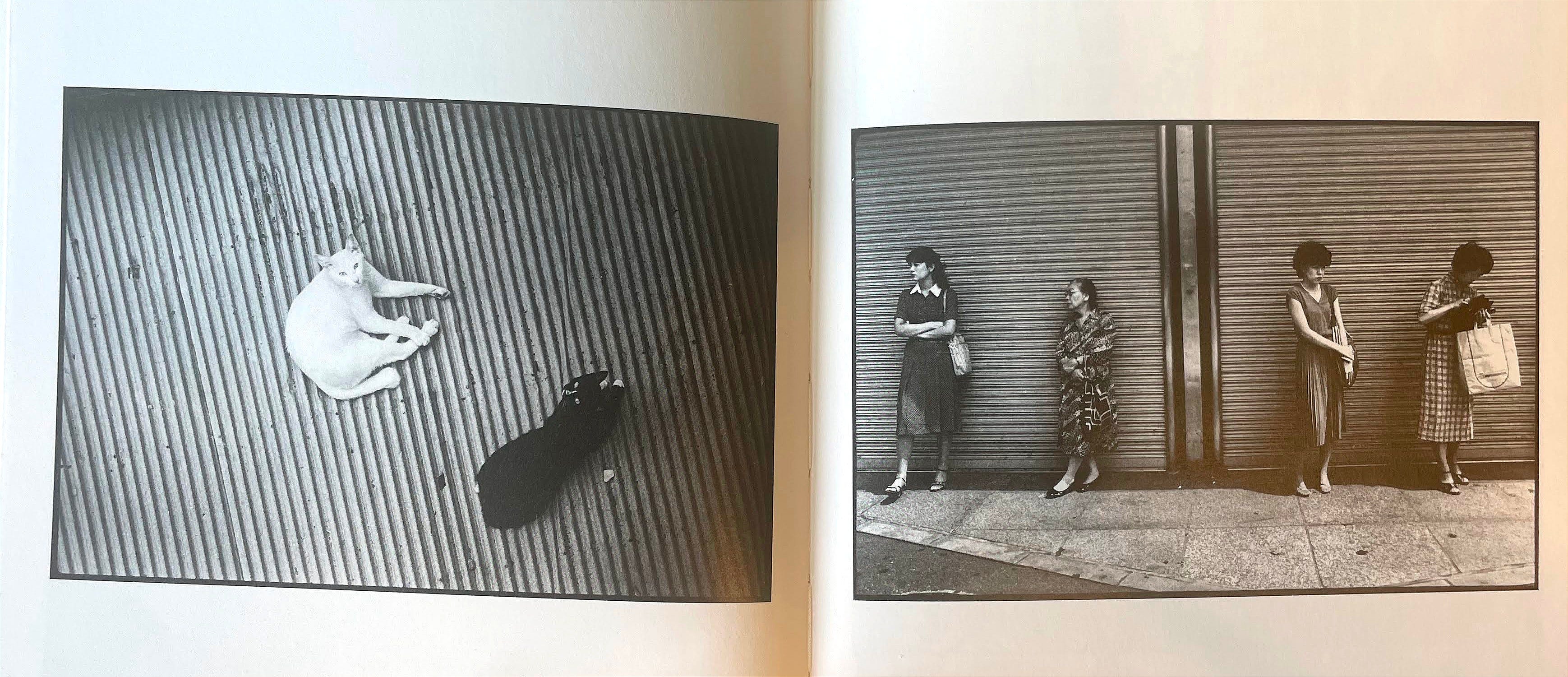
“You rise, you step to the window. Just below you, on the corrugated metal of the hangar abutting the hotel, two cats greet you, a black one and a white one. At the moment when you take the photo, the one on the right, the black one, gives you a look so exactly like that of the cat Whisky*1, at the other end of the world, in another life, that you tremble for an instant and —for once—you approve of having once written that in the past is like a foreign country: it is not a question of distance, but of crossing a frontier.”
Last week, I watched Landscape in the Mist, a 1988 Theo Angelopoulos film, after letting it marinate on my watchlist for about five years (thank you, Letterboxd). The summary is accurate, if superficial: Two Greek children embark on a journey to search for their father, who supposedly lives in Germany.
I originally put it on my list for several reasons, but mostly because I liked the title. It is a distinctly beautiful film, though certainly worthy of a content warning. I was particularly entranced by a scene where they find a torn segment of slide film in the trash.
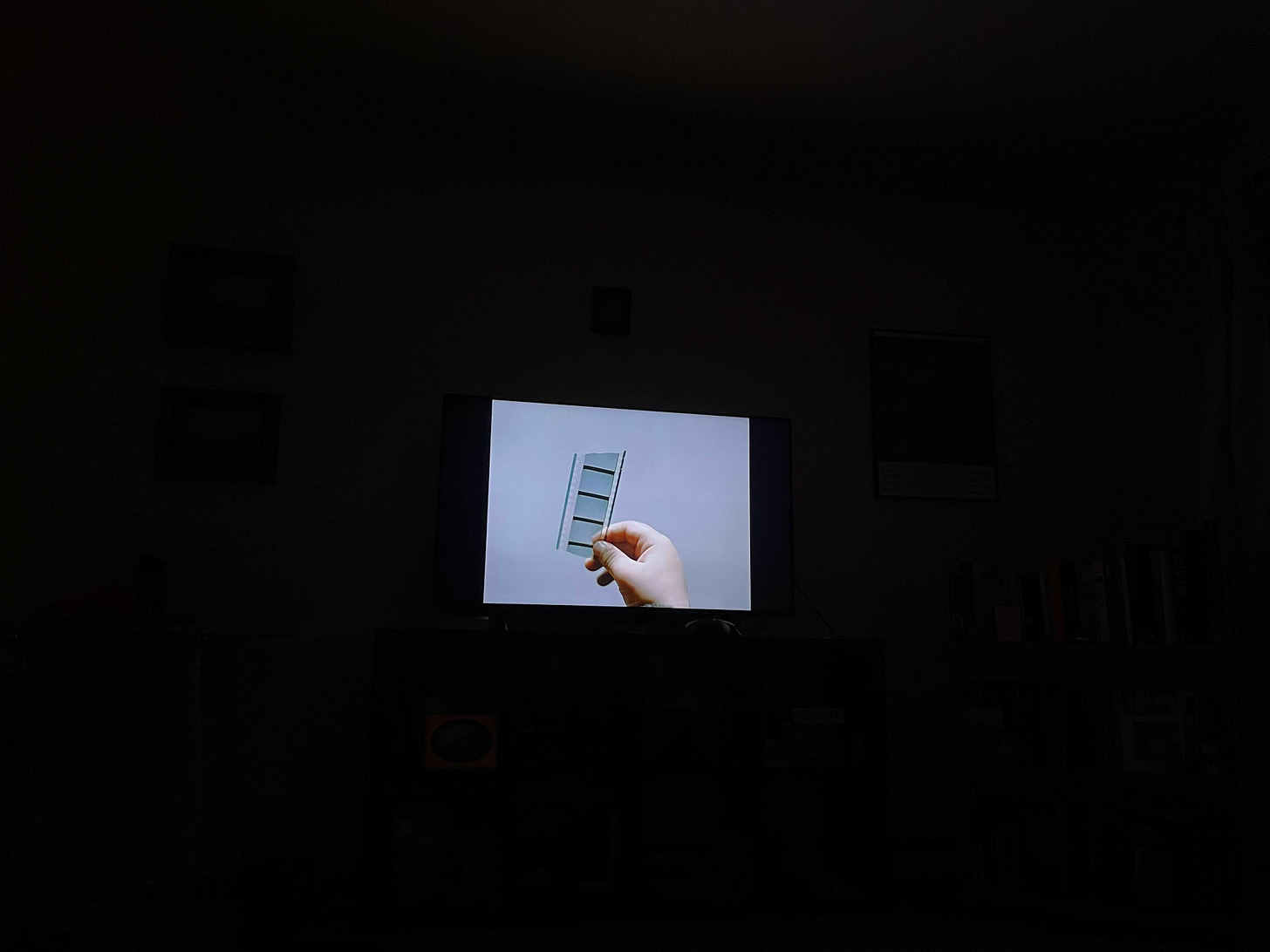
They stare at it together for a long time under a bright street light. There is a third character with the two children at this point, Orestes, who spends his time with a traveling theater troupe and is planning on joining the army the next day. Finally, he speaks:
“Can’t you see? Behind the mist…in the distance…can’t you see a tree?”
“No,” says the young girl.
“Me neither,” he replies, and drops it.
The younger boy, the little brother of the girl, picks it up and puts it in his pocket.
With love,
Indigo Conat-Naar
P.S: Upcoming shows, events, and other news
You Draw My House, I'll Draw Yours, the book, is a compilation of materials that Ezri Horne and I produced during our recent collaboration by the same name. In the collaboration, we took turns describing our childhood home while the other attempted to draw it. These verbal descriptions were recorded and rewritten with a cyanotype-filled rapidograph pen and engineer’s lettering kit, and the original pencil drawings were printed as cyanotypes. Back in June, Cate McQuaid invited us to share the making of this piece for her Substack, Ocean in a Drop. At that time, it was also on display at Piano Craft Gallery for our show, Going Nowhere In Either Direction.
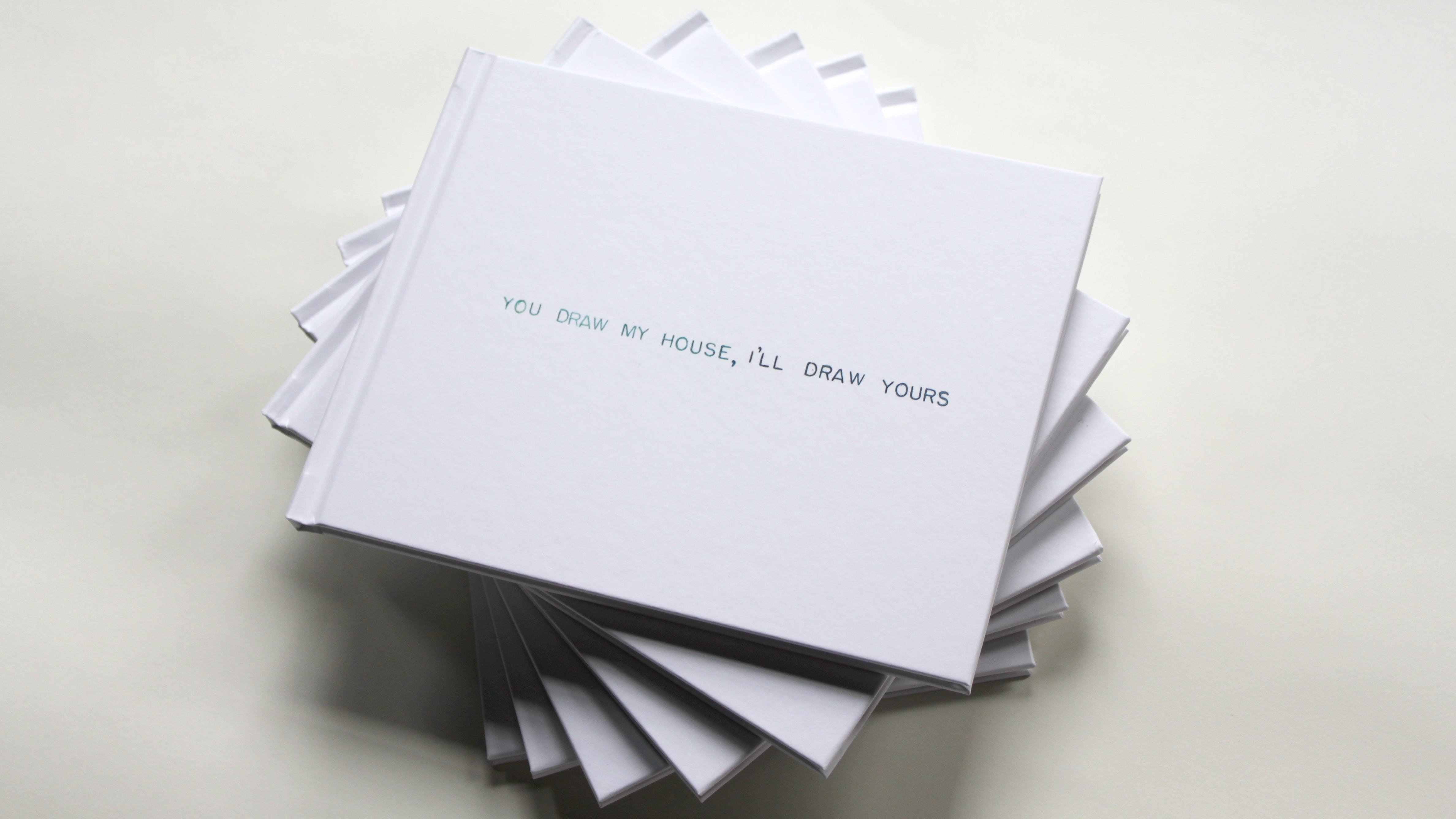
50 copies of the book have been printed in an 8x10 hardcover format, and they are being sold on a sliding scale, from $65-$95. From that price, $45 will go back to the artists to cover the cost of production. The remaining money will be donated to Gaza Soup Kitchen, a grassroots initiative led by the people of Gaza, serving hot meals to thousands daily across 10 kitchen sites.
Since the Nakba in 1948, Palestinian families have been holding onto keys to homes they can never return to. For many families in Palestine and beyond, home is a memory steeped in loss. We have had the privilege to remember our homes for this project without this shadow—both houses exist, and if we wanted to, we could show up tomorrow and knock on the door. You Draw My House, I'll Draw Yours is dedicated to those who do not currently have shelter, and those who have been violently removed from their homes by forces beyond their control.
Shipping is available, as is local pick-up in the Boston area. You can order yours here.
P.S.S: Studio Song of the Moment (Always by The Mountain Goats)
Original Air-Blue Gown, off of Full Force Galesburg (1997). I have gone back and forth with whether I want to include the full song for this P.S.S, but as I have been listening to this one on repeat for the past month when I’ve been overwhelmed by my new life here, it seemed fitting to include its entirety—in fact, it would be most accurate to write it out several more times.
Rain all burned away
The horseflies are an iridescent green
Plums boiled down to pulp
Drying on a screen
Bright red air inside the house here
I can barely draw breath
Dark blue shapes pop behind my eyelids
I am not afraid of death
And on the television
Black and white footage of the young Cassius Clay
My god, my god, my god
He was something
Fists flashing as he comes towards the screen
Sailing headlong into nothing
And disappearing, reappearing
Out there in the clearing
Floating down the slight breeze
That plays along the edges of the leaves
It’s you, it’s you
It’s you, you
We learn earlier in the essay of Marker’s previous cat, Whisky: “Without even raising your voice, you could just call from the second floor: ‘Whisky!’ and that gaze—yes, an unforgettable gaze—rose to meet you… A few microseconds later and there he was, on the balcony, by one of those wrinkles in space-time that only cats can slip through..”